Fast Charging Standards Explained: QC, USB-PD, SuperVOOC
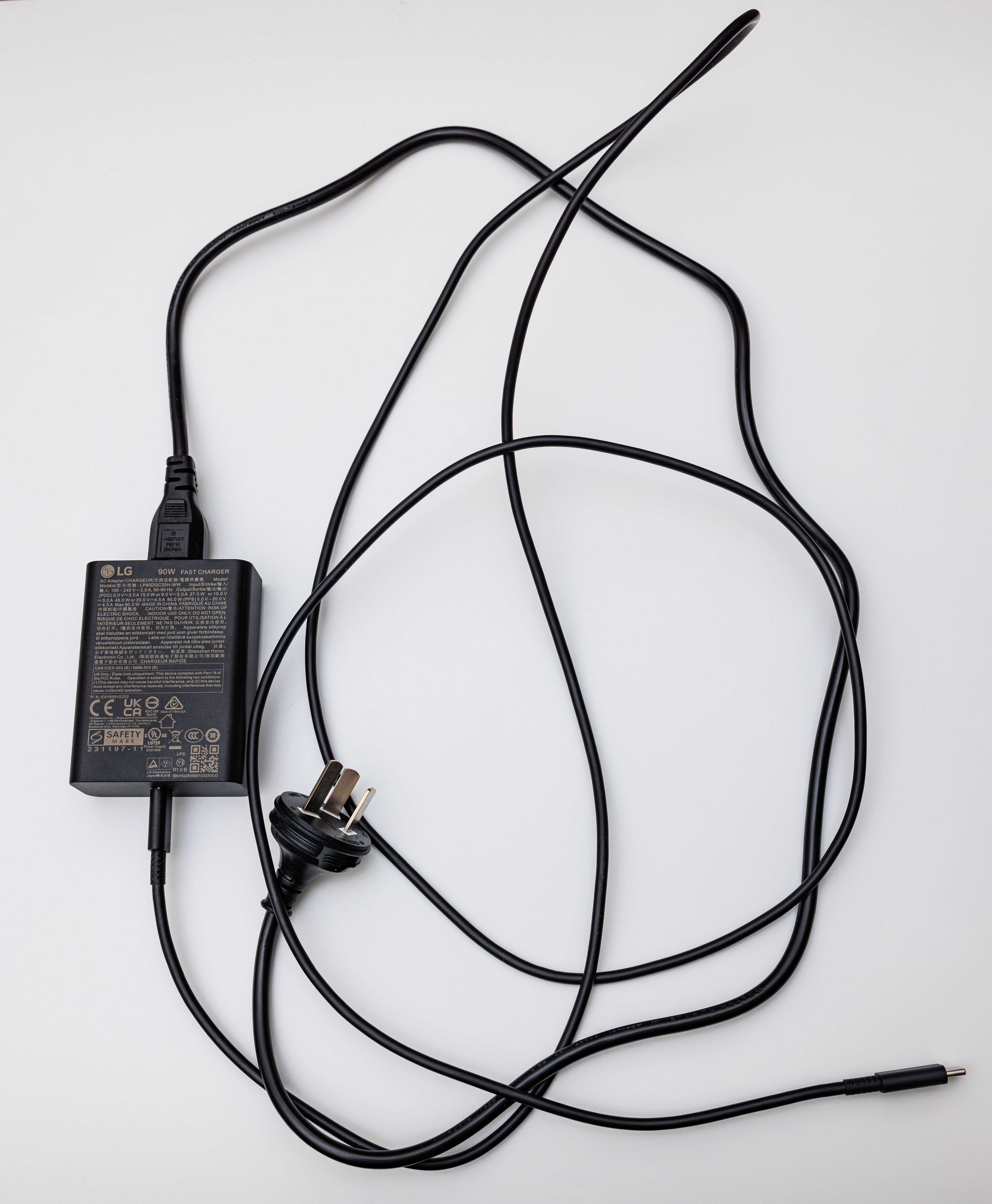
Charger boxes today are covered in acronyms: PD, PPS, QC, SuperVOOC, all promising big wattage numbers. Most only apply under specific conditions, and knowing the difference between fast charging standards determines whether your phone charges at its rated speed or quietly falls back to a fraction of it.
Quick answer: The three fast charging standards that matter today are USB Power Delivery (PD), Qualcomm Quick Charge (QC), and proprietary systems like OPPO/OnePlus SuperVOOC. USB-PD is the open, universal standard, topping out at 100W in its base form and up to 240W with PD 3.1 Extended Power Range for laptops. Quick Charge 4 and later runs on top of USB-PD and PPS rather than a separate scheme. SuperVOOC and similar proprietary systems need a matching charger, cable, and phone to hit their full rated speed, and fall back to standard PD wattage with anything else.
What you'll learn
- How the charging negotiation between phone and charger actually works
- What USB-PD, PPS, Quick Charge, and SuperVOOC each mean in practice, with real wattage numbers
- Why brand-name chargers sometimes charge faster than generic ones, and when they don't
- How cable quality and heat limit charging speed regardless of the standard
- How to check what fast charging standard your own setup is actually using
How Fast Charging Actually Works
Fast charging is not the charger forcing extra power into a phone, it is a negotiation. The charger and phone exchange signals over the USB data lines, and the phone requests only the voltage and current it is built to handle. A 100W charger plugged into a 15W phone still delivers roughly 15W, the same as a smaller charger would.
Once negotiated, charging follows a constant-current, constant-voltage (CC-CV) curve. Current stays high and roughly flat while the cell is below about 80 percent, then voltage holds steady while current tapers as the cell approaches 100 percent. That is why the first half of a charge feels fast and the last 20 percent always drags.
Two practical details limit real-world speed no matter which standard is involved:
- Cable rating. USB-C charging above 3A (60W) requires a 5A E-marked cable. A cheap, unmarked cable can quietly cap speed even when both charger and phone support more.
- Temperature. Lithium-ion cells charge safely in roughly 0 to 45 degrees Celsius, with 10 to 40 degrees Celsius as the ideal window. At 45C a cell accepts less full charge current, which is why phones throttle speed as they warm up.
USB Power Delivery (PD) and PPS: The Universal Standard
USB-PD is the open, USB-IF-backed standard most USB-C chargers and phones support in some form. Standard PD 3.0 uses fixed voltage tiers of 5V, 9V, 15V, and 20V at up to 5A, topping out at 100W (20V at 5A). PD 3.1 added Extended Power Range (EPR), with fixed 28V, 36V, and 48V tiers enabling up to 240W (48V at 5A) for laptops and other high-power devices, not phones.
The piece that matters most for phones is Programmable Power Supply (PPS), introduced alongside PD 3.0. PPS lets a device request any voltage between 3.3V and 21V in 20mV steps and adjust current dynamically. PPS is effectively the compatibility layer other standards build on: Samsung's Super Fast Charging, Pixel fast charging, and Quick Charge 4 and later all ride on USB-PD PPS, which is why a generic PPS charger often gets close to a phone's rated speed without the brand name on the box.
Qualcomm Quick Charge: Where It Fits Today
Quick Charge has gone through several generations, with its wattage ceiling growing each time:
| Generation | Max Wattage | Voltage / Current | Notes |
|---|---|---|---|
| QC 1.0 | 10W | 5V fixed | Legacy |
| QC 2.0 | 18W | 5V/9V/12V/20V | Legacy |
| QC 3.0 / 3+ | 18W | 3.6V-20V, 200mV steps (INOV) | Still common in mid-range chargers |
| QC 4 / 4+ | 18-27W per port, up to 100W with dual-charge | Built on USB-PD + PPS | Dual-cell setups for higher totals |
| QC 5 | 100W+ | Dual-cell, e.g. two 50W cells | Reference designs, select flagships |
QC 5 hits its triple-digit numbers using dual-cell battery designs, two series-connected cells, and Qualcomm has claimed a 4,500mAh battery can go from 0 to 50 percent in about 5 minutes under lab conditions. Since QC 4, Quick Charge is built on USB-PD and PPS, so a QC4+/QC5 charger is also a standard PD charger with extra negotiation layered on top.
Quick Charge has become less visible as a marketed brand in flagships since the mid-2020s, as many Android OEMs shifted to PD PPS directly or to their own proprietary protocols, though QC remains common in mid-range devices and aftermarket chargers.
SuperVOOC: OPPO and OnePlus's Proprietary Speed
OPPO demonstrated 240W SuperVOOC in 2022, built on 20V/12A delivery with three parallel charge pumps stepping it down to roughly 10V/24A at the battery. It filled a 4,500mAh battery in about 9 minutes but never shipped broadly at that wattage.
Retail phones in 2025-2026 are more conservative than the lab demo. The OnePlus 15's global version ships with an 80W charger and supports up to 100W with OnePlus's separate 100W adapter, while its China variant reaches up to 120W SuperVOOC, plus 50W AirVOOC wireless charging. OPPO's 150W SuperVOOC tier has also paired with a "Battery Health Engine," which OPPO says preserves roughly 80 percent of original capacity after 1,600 charge cycles on supporting models, about double a typical smartphone battery's rated cycle life.
The catch with SuperVOOC, and proprietary systems generally, is that it needs a matching charger, cable, and phone-side controller to hit full speed. Plug a SuperVOOC phone into a third-party PD/PPS charger and it typically falls back to about 36 to 55W instead of its rated peak.
Samsung Super Fast Charging
Samsung runs two wired tiers: 25W Super Fast Charging on base Galaxy S and A-series models, and 45W Super Fast Charging 2.0 on Ultra models, from the Galaxy S22 Ultra through the current lineup.
On the Galaxy S24 generation, hitting the full 45W required a Samsung 45W adapter plus a 5A E-marked cable. The Galaxy S25 Plus and S25 Ultra simplified this by delivering 45W at 15V/3A over a standard 3A cable instead, removing the mandatory special-cable requirement. Samsung markets 45W charging as roughly 0 to 65 percent in about 30 minutes on Ultra models, versus a slower curve on 25W base models. Because Samsung's fast charging is built on USB-PD with PPS, many third-party PPS chargers reach Samsung's rated speeds without a Samsung-branded adapter.
Standards Compared at a Glance
| Standard | Typical Max Wattage | Voltage / Current Example | Who Uses It |
|---|---|---|---|
| USB-PD (base, PD 3.0) | 100W | 20V at 5A | Universal: laptops, tablets, most USB-C phones |
| USB-PD 3.1 EPR | Up to 240W | 48V at 5A | High-power laptops; rarely used by phones |
| USB-PD PPS | Up to 100W (adjustable) | 3.3V-21V in 20mV steps | Samsung, Google Pixel, most modern Android phones |
| Qualcomm Quick Charge 3.0/3+ | 18W | 3.6V-20V in 200mV steps | Mid-range Android, aftermarket chargers |
| Qualcomm Quick Charge 4/4+ | 18-27W per port (up to 100W dual-cell) | Built on USB-PD + PPS | Snapdragon-based phones supporting QC |
| Qualcomm Quick Charge 5 | 100W+ | Dual-cell, e.g. 2 x 50W | Reference designs, some Motorola/ASUS models |
| OPPO/OnePlus SuperVOOC (lab peak) | 240W | 20V at 12A | OPPO Find X demo unit (2022, not widely retailed) |
| OPPO/OnePlus SuperVOOC (2025-26 retail) | 80-120W wired, 50W AirVOOC wireless | Proprietary charge-pump architecture | OnePlus 15, recent OPPO Find/Reno flagships |
| Samsung Super Fast Charging | 25W | 9V at approximately 2.77A | Base Galaxy S and A-series models |
| Samsung Super Fast Charging 2.0 | 45W | Approximately 11V at 4A | Galaxy S22 Ultra through current Ultra models |
Compatibility: What Happens When Standards Mix
A charger and phone only reach their fastest shared speed if both support a common protocol at a common voltage/current combination. Otherwise the pairing falls back to basic 5V USB charging, often just 5W to 10W.
Mixing brands generally works fine for USB-PD and PD-PPS devices, since those standards are open and cross-compatible. Proprietary schemes like SuperVOOC need the matching ecosystem to unlock their top wattage. Cable quality matters just as much: an unmarked USB-C cable can silently cap current at 3A (60W) or lower.
Reading the actual watts and amps flowing during a charge is the most reliable way to confirm whether a combination is reaching its rated speed, since manufacturer reporting varies and is sometimes inaccurate across phone models. This is what AmpereFlow measures and displays live, along with fast-charging detection and charging power broken down by battery level.
How to Check Which Fast Charging Standard Your Setup Is Actually Using
- Plug in the charger and cable you want to test. Connect your phone to the specific charger and cable combination you want to check, since speed depends on all three (phone, charger, cable) agreeing on a protocol.
- Open AmpereFlow and check the live reading. Open the app or home-screen widget to see live watts and amps flowing into the phone right now, corrected for manufacturer-specific reporting quirks that can otherwise misstate current and voltage.
- Look for the fast-charging detection indicator. Check whether AmpereFlow flags the connection as fast charging and, where available, which power class it landed on, then compare that live wattage against the number printed on the charger.
- Watch charging power by battery level. Track how wattage changes as the percentage climbs. Expect roughly flat, high wattage until about 80 percent, then a taper as the phone shifts from constant-current to constant-voltage charging near full.
- Check charge time to full and temperature. Use the charge time to full estimate and the voltage/temperature reading to see whether the combination is charging at a reasonable pace without running unusually hot, then compare against history from previous charges for the same phone.
Key takeaways
- Fast charging is a negotiated handshake, not a forced push. A phone only draws the voltage and current it is built to accept, regardless of the charger's rating.
- USB-PD with PPS is the universal backbone: Quick Charge 4/5, Samsung Super Fast Charging, and Pixel fast charging all build on it, which is why generic PPS chargers often come close to rated speeds.
- Proprietary systems like SuperVOOC hit their highest numbers only with a matching charger, cable, and phone, and fall back to roughly 36 to 55W on third-party PD hardware.
- Cable rating and heat, not just the standard's name, are frequent bottlenecks. A non-E-marked cable or a warm phone can cap speed well below what both charger and phone support.
- Checking live watts, amps, and charging power by battery level is the clearest way to see which standard a setup actually landed on, since manufacturer reporting is not always accurate.
Frequently asked questions
What is the fastest phone charging standard available right now?
OPPO and OnePlus's SuperVOOC has demonstrated the highest peak, 240W in lab conditions back in 2022 (20V at 12A), but retail phones in 2025-2026 top out lower, typically 80W to 120W wired. On the universal side, USB-PD 3.1 EPR can carry up to 240W (48V at 5A), though that ceiling targets laptops, not phones.
Is USB Power Delivery the same thing as Quick Charge?
No. USB-PD is an open USB-IF standard supported by almost every USB-C charger and device. Quick Charge is Qualcomm's proprietary protocol tied to Snapdragon-based phones. Since Quick Charge 4, Qualcomm built QC on top of USB-PD and PPS, so a QC4+/QC5 charger is also a standard PD charger with extra negotiation layered in.
Will a high-wattage charger damage a phone that only supports slower charging?
No. Fast charging is negotiated between the charger and the phone before extra power flows. The phone requests only the voltage and current it is built to accept, so a 65W charger plugged into a 15W phone still delivers roughly 15W rather than forcing more power in.
Does fast charging wear out a battery faster than slow charging?
Heat, more than raw speed, drives lithium-ion aging. Charging above roughly 45 degrees Celsius accelerates degradation, which is why phones taper current as they warm up or near full using constant-current, constant-voltage charging. Watching temperature and charging power by battery level over a full cycle, which AmpereFlow reports, shows this tapering happening in real time.
Why does my phone charge slower with a different brand's charger?
Proprietary top-speed protocols like SuperVOOC or Samsung's 45W Super Fast Charging 2.0 need a matching charger, cable, and phone-side controller to complete their specific handshake. Plug a SuperVOOC phone into a generic PD/PPS charger and it typically falls back to around 36 to 55W instead of its rated peak.
Do I need a special cable for fast charging?
For anything above 3A (60W), the USB-C spec requires a 5A E-marked cable, and Samsung required a special 5A cable for full 45W speed on the Galaxy S24 generation. The Galaxy S25 Plus and S25 Ultra removed that requirement by delivering 45W at 15V/3A over a standard 3A cable instead, but many other 45W-plus setups still need an E-marked cable to hit rated speed.
